Four ways to put us to work.
A complete application when the tool does not exist. An agent when it saves real time on one precise task. Training when your teams must hold the wheel themselves. Every example below is already running.
Use case 01
Full App, when the tool does not exist
You run your business in a spreadsheet, or in software that speaks a different trade than yours. We build the platform that is missing, and keep it alive in production.Delivered projects
-
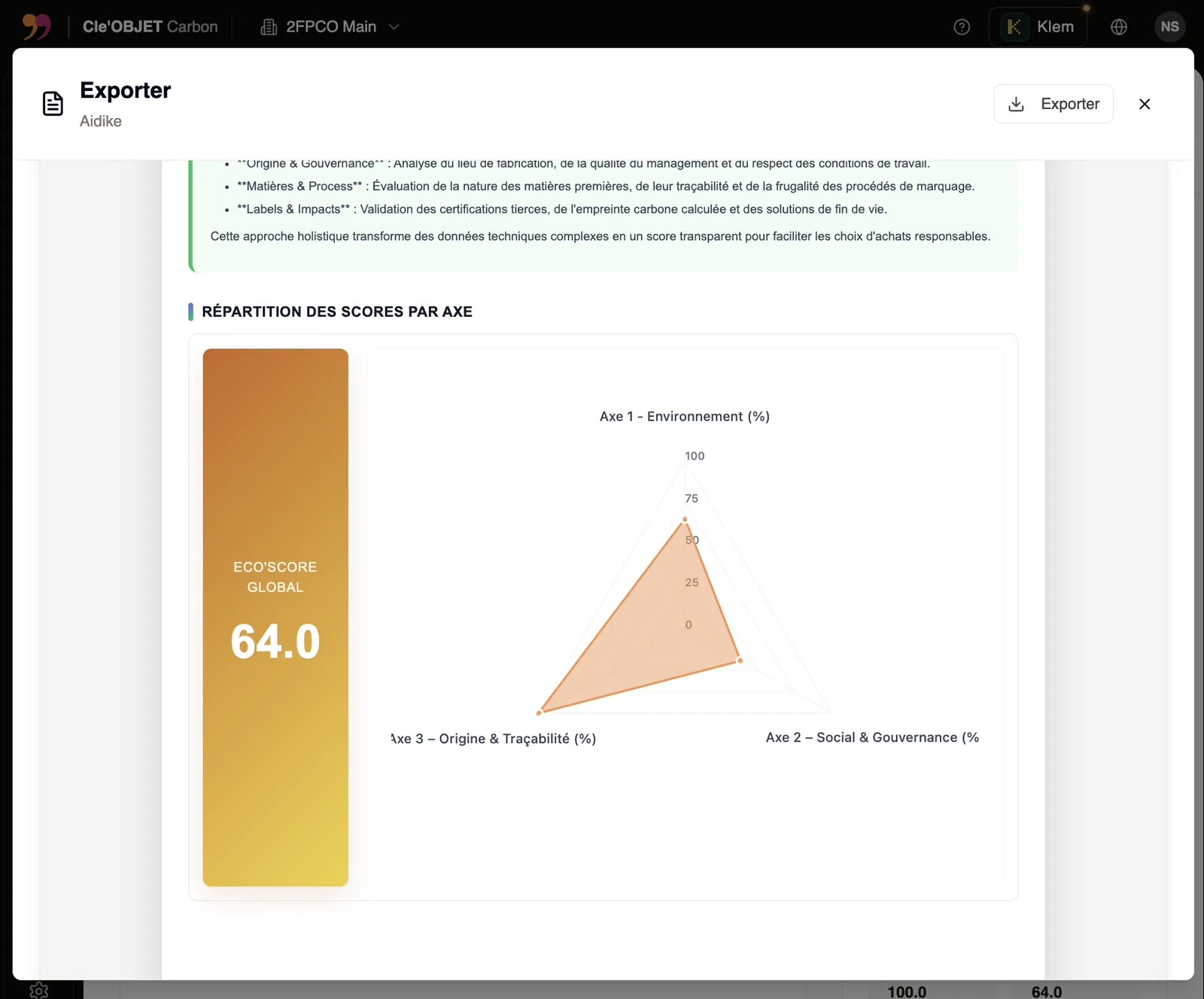 Cle'OBJET Carbon
Fédération Objet-Média
One central app for the carbon footprint of the industry's products, with an eco-score for each product.
View the case study
-
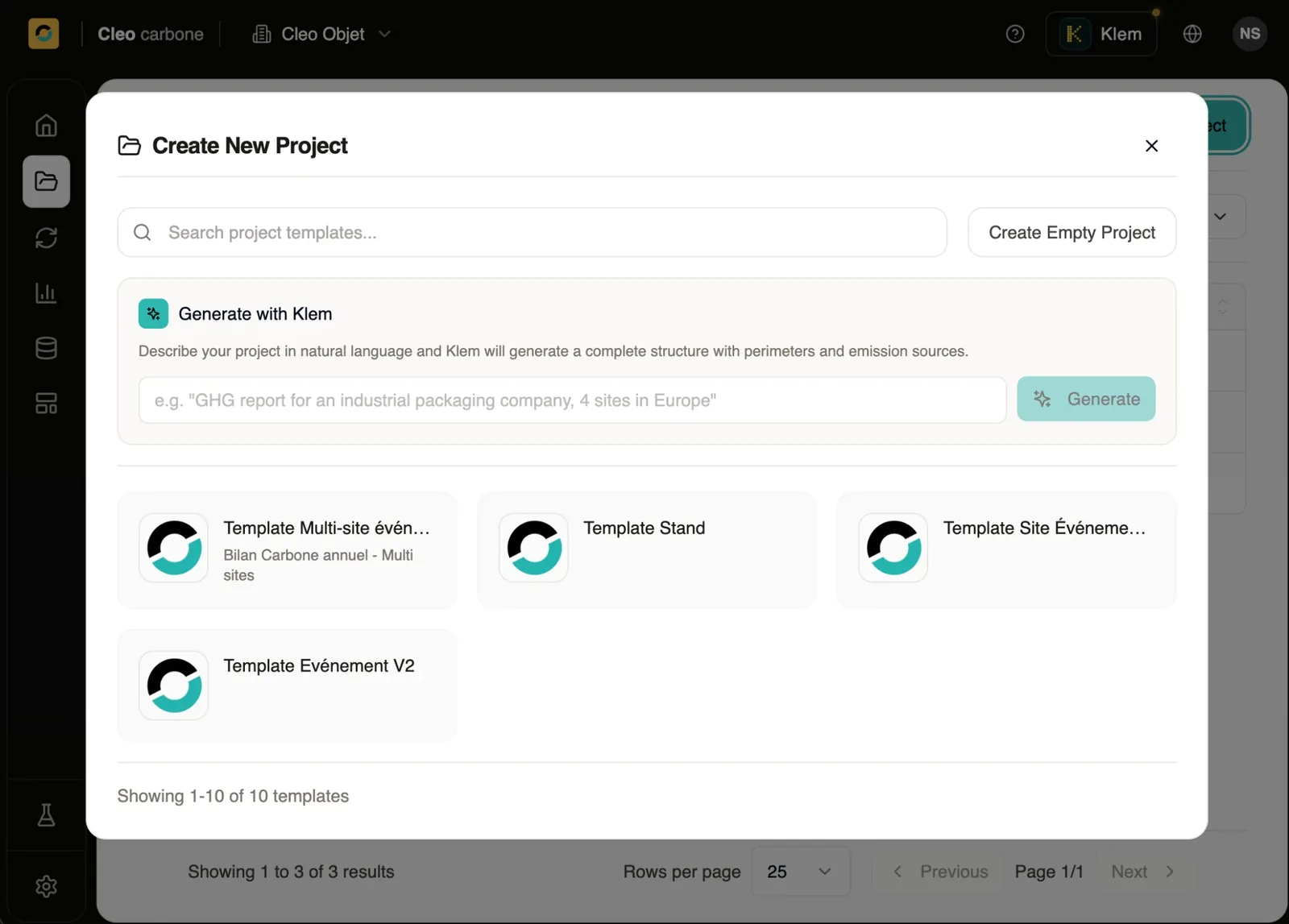 Carbon accounting for the events industry
Cleo Carbone, for UNIMEV
The events industry's carbon accounting tool, with standardised collection and shared data.
View the case study
-
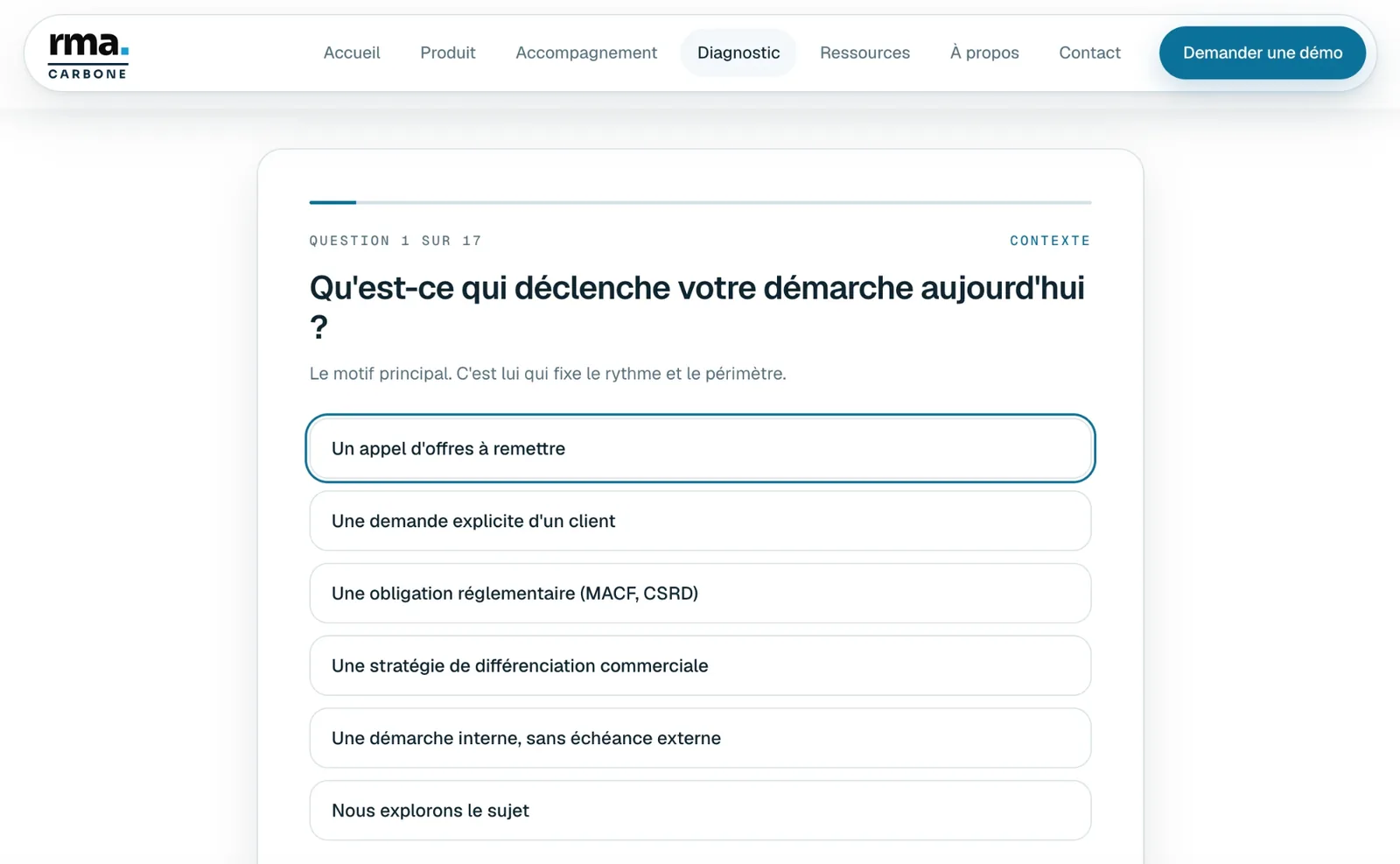 ESG diagnostic and audit with scoring
RMA Consulting
A guided ESG diagnostic that positions the company with a score and shapes the engagement.
View the case study
01
The data model
We start from your trade, not from a template. Which entities actually exist, what links them, what must be unique, what may be missing. It is the most expensive decision to correct later, so it is the first one we take with the users. On your real data, not on a test fixture
02
The working screens
One screen per real action, in the order the work happens. The scope narrows before it widens: we remove what forces a choice rather than adding one more feature. Shipped in batches, put in users' hands
03
Accounts and roles
Who sees what, who can do what. Authentication, separate organisations, role based rights, an audit log of sensitive actions. This is what lets a tool leave one team and serve the whole company. Isolation verified before go live
04
Going live
Identified hosting, backups, a restore that has been tested, and migration of the existing system without breaking addresses. Then we keep it alive: fixes, evolutions, and one contact who knows your system. France or European Union, written into the contract
Use case 02
AI agent, when one precise task takes too long
A useful agent does not replace your trade, it absorbs the question you are asked forty times a day. With us, the model only writes prose: a price, an availability or an address is computed by the server, then re-read before display.Delivered projects
-
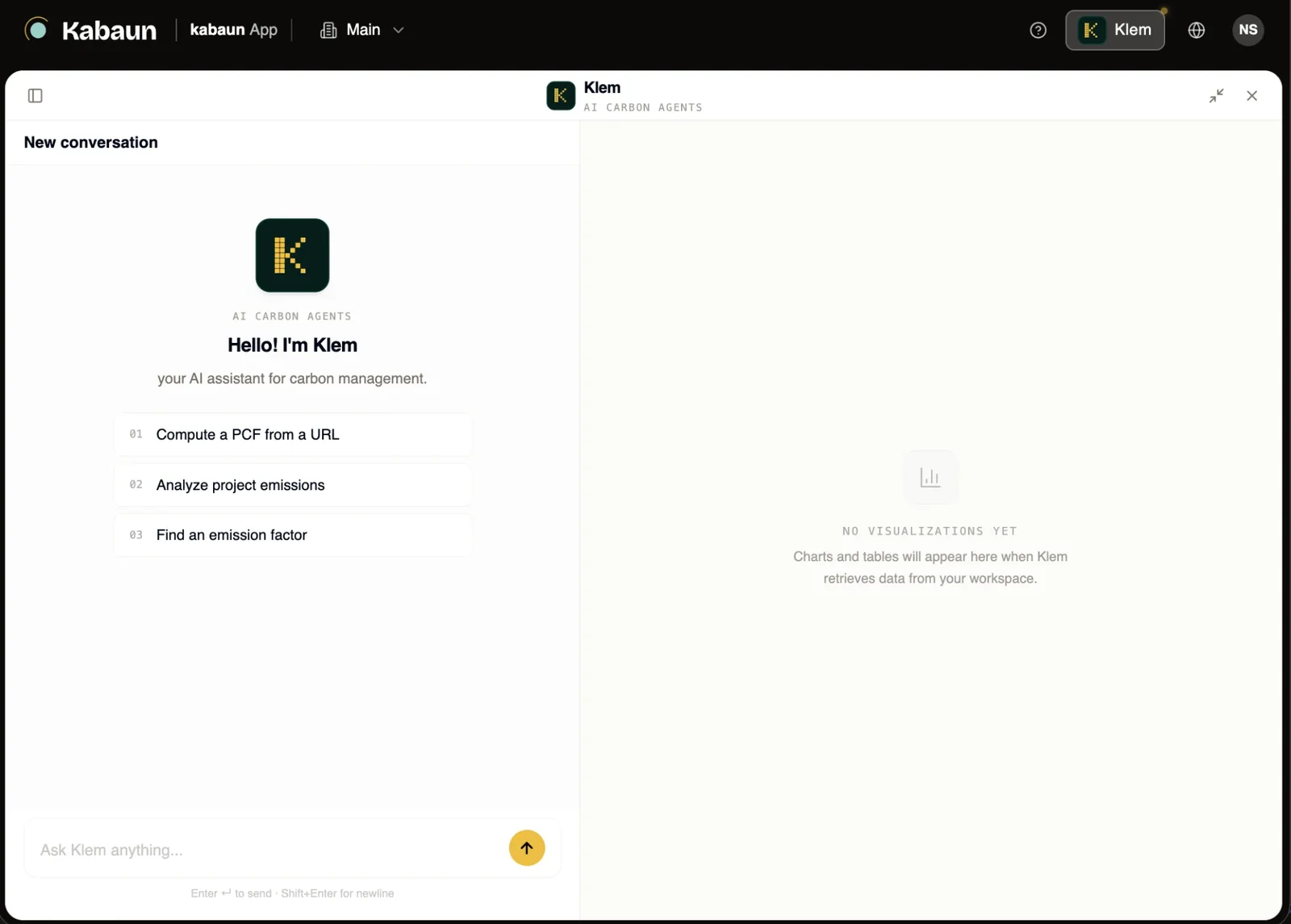 Carbon accounting and sustainability agent
Klem, for Kabaun
The AI agent of the Kabaun platform: reporting, data collection and file processing.
View the case study
-
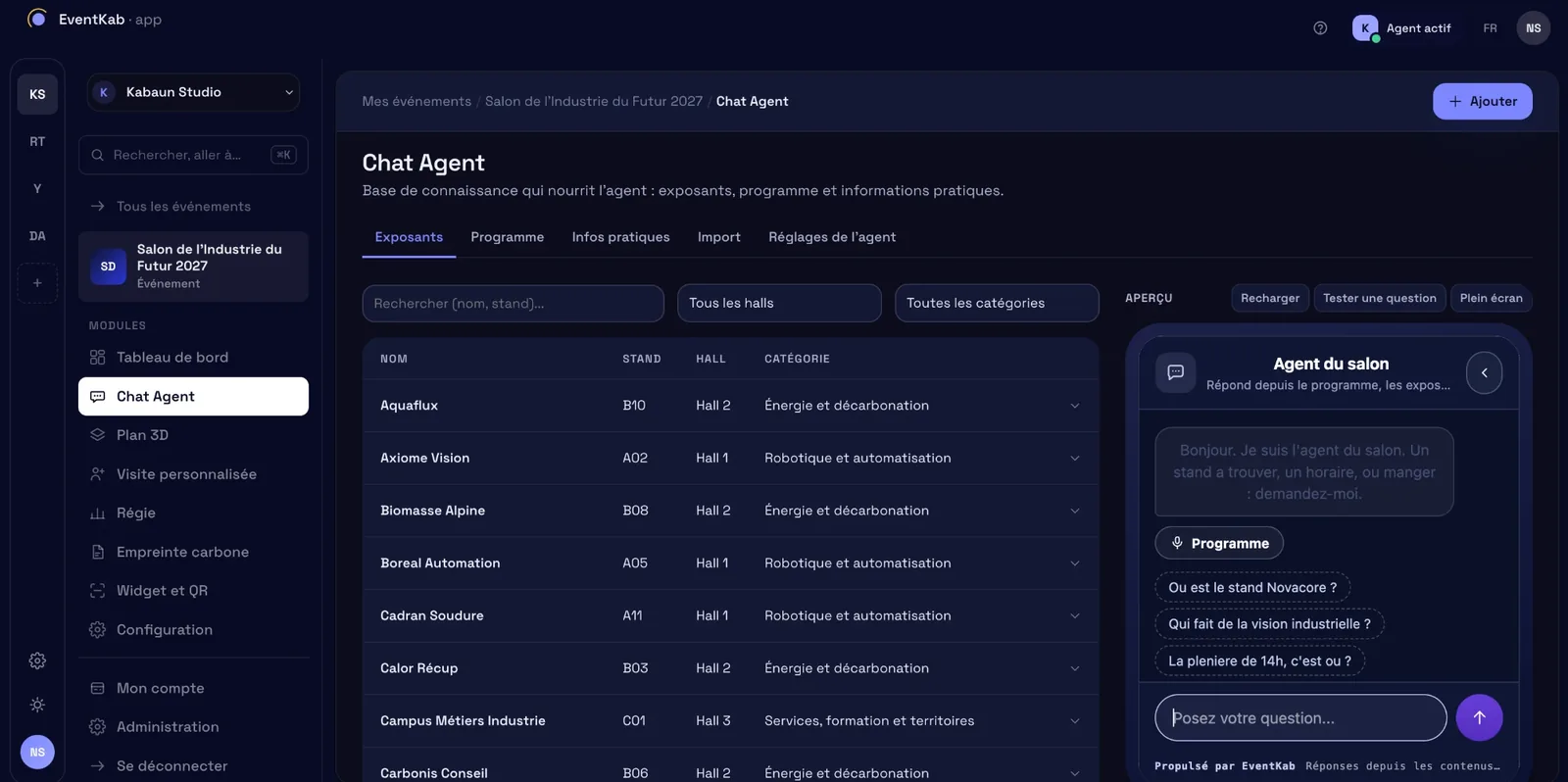 Chat agent for trade shows
EventKab
An agent that answers trade show visitors from the exhibitor list, the programme and the practical information.
View the case study
-
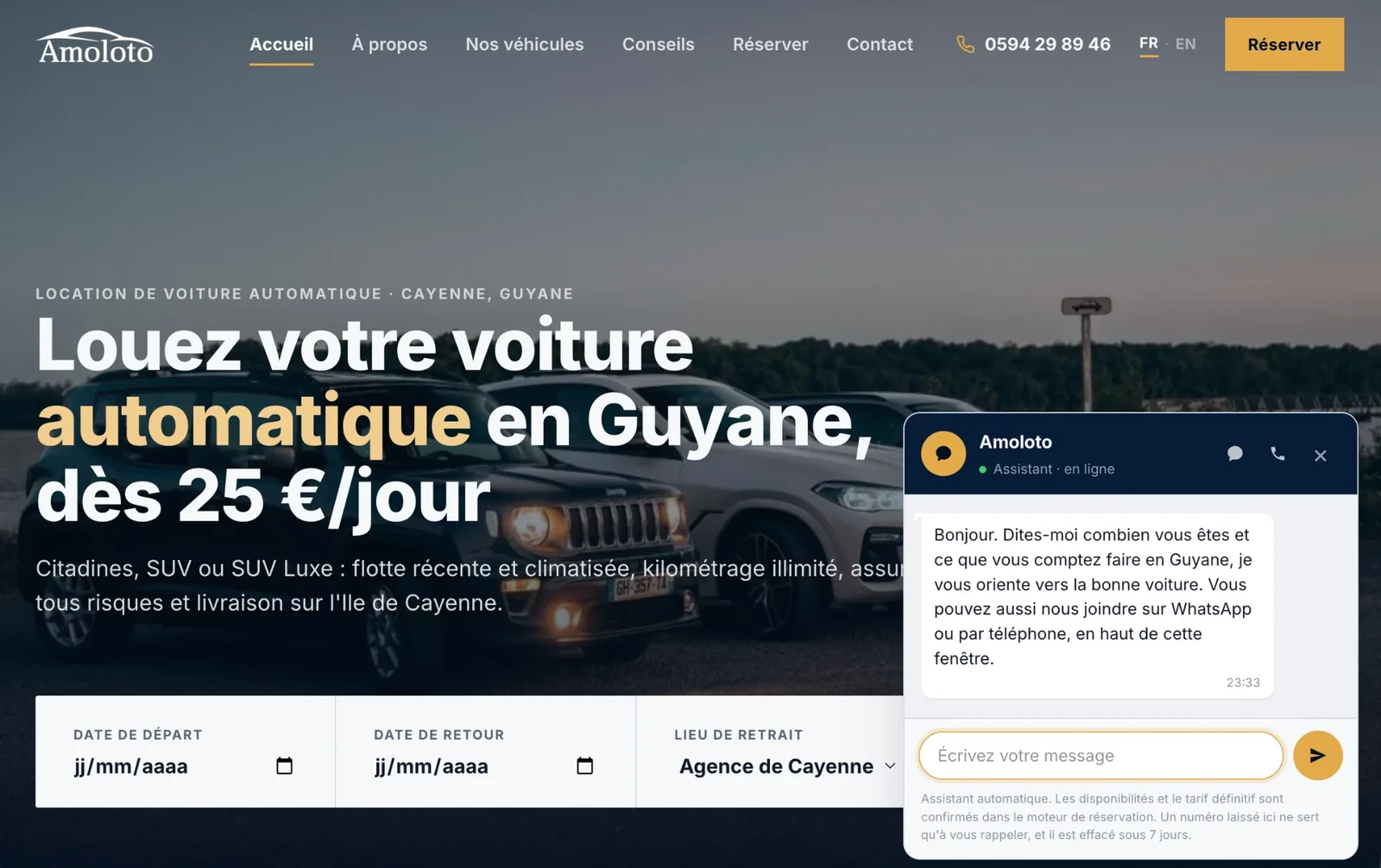 Booking assistant
Amoloto
An assistant that guides visitors to the right rental vehicle, without ever making up a price.
View the case study
01
The scope, written before the code
We write what the agent must do and above all what it must never do. The list of forbidden subjects is shorter than people expect, and more important than the rest. A document reviewed and signed before the first model call
02
Answers drawn from your content
The agent answers from a closed corpus: your pages, your catalogue, your practical information. It cites where the answer comes from. When the information does not exist, it says so and refers the visitor to you, instead of inventing. Closed corpus, cited source, the right not to know
03
Server side calculation
A price, an availability or an address is never produced by the model: the server computes it from the real data and inserts it into the answer. An amount appearing where it should not triggers replacement of the entire answer. The model writes, it does not quote figures
04
Handover to a human
The agent introduces itself as an agent and knows when to hand over. On anything involving advice or sales, it routes to the competent person. The back office shows you every question left unanswered. Transparency, and a way through to your team
Use case 03
Not everything needs a conversation. Many costly tasks are silent chains: produce a document, follow up at the right moment, collect a piece of data, publish. They run with no interface, and nobody sees them as long as they work.
Automation, when a flow repeats with nobody to hold it
01
The trigger
What sets the job running: a form received, a file dropped, a time of day, an event in another tool. We write it down explicitly, because this is where the surprises hide. A single entry point, identified
02
The job
It runs without anyone starting it. A brief that becomes a published site, a follow up sent at the right moment, data collected as it comes. No model call for what a script does better and cheaper. The simplest thing that does the job
03
The outputs
Emails, documents, updates in your tools. Every send starts from a template you have reviewed, with an authenticated sending address so it does not land in spam. Nothing goes out before you have seen the template
04
The log and the alerts
A silent automation is a dangerous automation. Every run leaves a readable trace, and a failure is reported to you instead of being discovered three months later. You see what happened, and what failed
Use case 04
We train on what we practise every day, in our own projects. No tour of the tools of the moment: how to frame a use case, how to write instructions that hold, and how to know what you must never hand to a model.
Training, when your teams must hold the wheel
01
Framing a use case, before opening a tool
Separate what can be automated from what must not be. Spot the repetitive tasks that really cost, and rule out the ones whose automation would create a bigger risk than the gain. Workshop format, half a day
02
Writing instructions that hold
An instruction is judged on what it prevents, not on what it asks for. Closed lists, explicit bans, server side checking: we replay the cases where a model invented a price or a guarantee, and we build the filter that stops it. Workshop format, one day
03
Working with agents day to day
Our own production method, passed on as it is: split the work by trade, route each request to the right skill, write the guardrails after each incident, and keep a memory that survives sessions. Coaching format, over several weeks
04
Responsible AI and digital restraint
What RGESN and AFNOR Spec 2314 change in practice in a design decision. Measure before optimising, and know how to say that a project does not deserve to be built. Workshop format, half a dayNote: these formats describe what we know how to pass on, taken from our projects in production. They are not off the shelf sessions, nor client references. The content is built with you, from your own cases.
How we work
Our projects are not held together by one person who knows everything. They are held by a written method, applied to our own products as much as to our clients', and it can be passed on.
The framework we use to build all this
13
Trades tooled up
22
Written procedures
100+
Clients deployed
0
Invented prices
01
One trade, one skill
Design, integration, back office, security, search, deployment, testing: each domain has its owner and its written procedure, instead of one generalist improvising everywhere.
02
Routing, not improvisation
An incoming request is recognised by its signals and sent to the right skill. When two domains contradict each other, we settle it before executing, never after.
03
Guardrails written after incidents
Every cross cutting rule cost something once. They are written down, active on every project, and some are checked automatically on each file change.
04
A memory that survives sessions
What we learn on a project is written down and reloaded next time. A trap met once is not paid for twice.
05
A gate before delivery
Testing across several screen widths, a security check, detection of automatic writing tics. What is not verified is not announced as done.
Let's talk
Which of these three cases looks like yours?
We always start with a diagnostic: what can be automated, what must not be, and what it really costs.